If you regularly delay important tasks, break promises to yourself, or depend on motivation that disappears when life gets difficult, the problem may not be laziness. You may simply need a better system for following through.
Learning how to build self-discipline means making useful actions easier to start, reducing unnecessary decisions, managing distractions, and creating a reliable way to recover when you slip. Discipline is not about being harsh with yourself. It is the ability to keep your actions aligned with your priorities, even when you do not feel motivated.
In this guide, you will learn practical ways to build self-discipline through clear goals, consistent routines, environmental design, short work sessions, progress tracking, accountability, and effective recovery after setbacks.
What Is Self-Discipline?
Self-discipline is the ability to follow through on an important action even when you would rather do something easier or more enjoyable. It helps you make decisions based on your priorities instead of reacting to every temporary impulse.
Self-discipline does not mean eliminating comfort, working constantly, or forcing yourself to be productive every minute of the day. Healthy discipline is about creating conditions that make consistent behavior easier.
For example, studying for 25 minutes before checking social media, exercising according to a planned schedule, sticking to a spending limit, or completing an important task before opening distracting apps are all examples of self-discipline.
Why Is Self-Discipline Important?
Motivation can be useful, but it changes from day to day. Self-discipline gives you a way to continue working toward a goal when motivation is low.
- It helps you follow through on important commitments.
- It reduces dependence on temporary motivation.
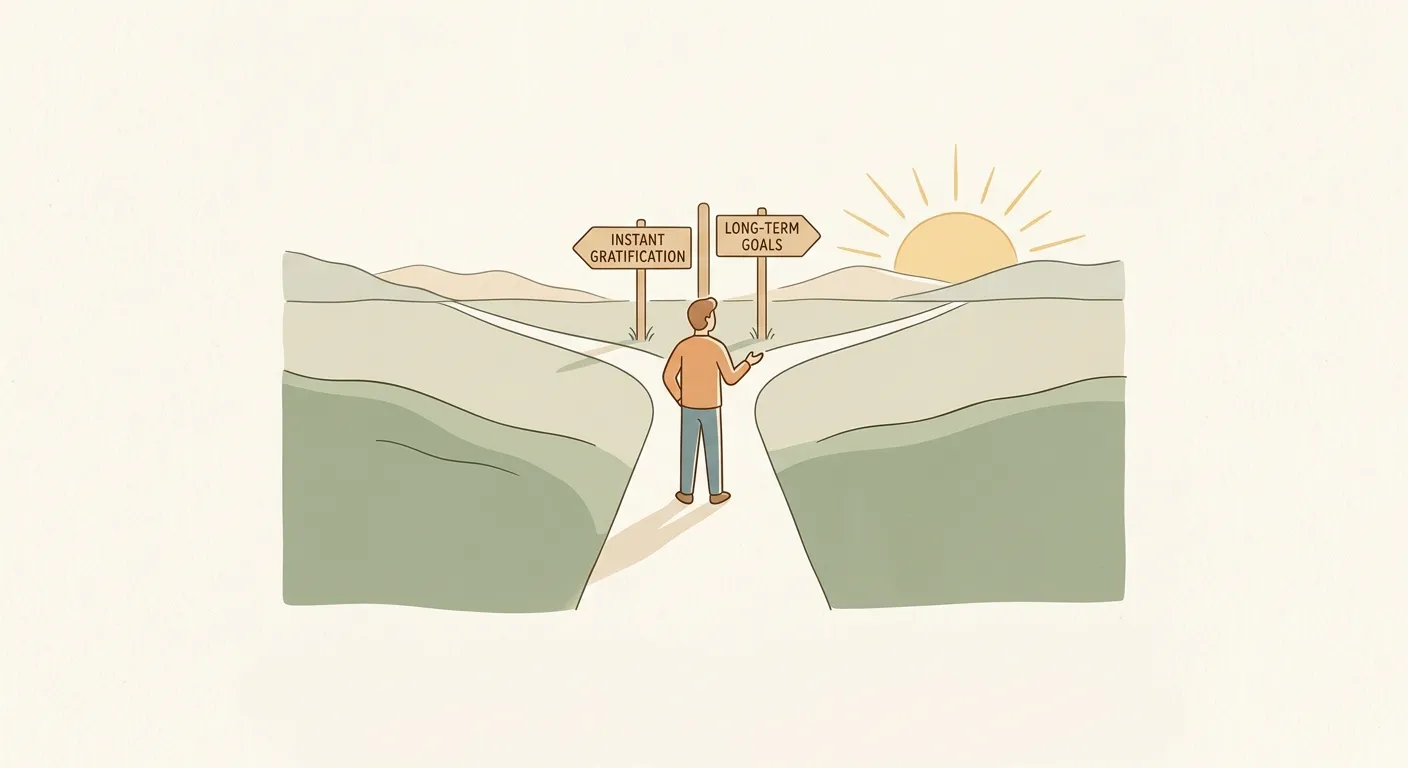
- It makes long-term goals easier to turn into daily actions.
- It helps you manage distractions and impulsive decisions.
- It creates consistency, which is essential for many long-term goals.
The goal is not perfect discipline. The goal is to become more reliable at doing the things that matter to you.
Self-Discipline vs. Motivation
Motivation is the desire or willingness to take action. Self-discipline is the ability to act according to your priorities even when that motivation is weak.
If you wait until you feel motivated to exercise, study, clean, save money, or complete difficult work, you may repeatedly postpone those actions. A disciplined system reduces the number of times you have to make that decision.
Instead of asking, “Do I feel like doing this today?” ask, “What is the smallest useful action I can complete according to my plan?”
How to Build Self-Discipline
1. Identify What Is Getting in Your Way
Before creating a new routine, identify why your current routine fails. Saying “I have no discipline” is a label, not a diagnosis. A specific problem gives you something you can actually change.
For example:
- I plan to exercise after work, but I sit down with my phone and lose an hour.
- I want to study in the evening, but I am too tired to decide what to study.
- I spend more than planned when I feel stressed.
- I work intensely for several days, miss one day, and then stop completely.
- I avoid difficult tasks by staying busy with easier work.
For one week, observe the moments when you fail to follow through. Record what you intended to do, when and where you planned to do it, what you did instead, what you were feeling, and what made the alternative easier.
Common obstacles include:
- Goals that are too broad.
- Actions that require too much preparation.
- Poor sleep or an overloaded schedule.
- Constant access to distractions.
- Unclear priorities.
- Starting with unrealistic intensity.
- Treating discomfort as evidence that the plan is failing.
- Viewing one missed day as total failure.
Self-awareness matters because consistency is influenced by your environment, energy, expectations, habits, and schedule—not simply by willpower.
2. Choose One Clear and Achievable Goal
An outcome is what you eventually want. A behavior is what you can actually do today. Good goals connect the two.
| Outcome | Daily or Weekly Behavior |
|---|---|
| Get fitter | Walk for 20 minutes after lunch four days a week. |
| Improve finances | Review spending for 10 minutes every Friday. |
| Write a book | Draft 300 words before checking social media. |
| Learn a language | Complete one lesson after breakfast. |
| Keep the house under control | Reset the kitchen for 10 minutes each evening. |
A useful goal should be meaningful enough to matter and realistic enough to repeat. If you currently exercise once a week, planning two hours of training every morning may create enthusiasm for a few days followed by exhaustion.
Instead, start with a level you can realistically maintain. A good behavior is:
- Specific: You know exactly what action is required.
- Measurable: You can tell whether you completed it.
- Scheduled: It has a time, location, or reliable trigger.
- Limited: It does not compete with every other priority.
Instead of “be more productive,” try: “From Monday to Friday, I will spend the first 30 minutes of my workday on my highest-priority task before opening nonessential messages.”
Start with one or two important behaviors rather than attempting a complete lifestyle transformation.
3. Set a Minimum Standard
Create a smaller version of your habit that you can complete even on a difficult day. The minimum standard keeps the routine alive without requiring you to perform at your best every time.
- Read one page.
- Do five minutes of mobility work.
- Write 50 words.
- Review one expense.
- Wash dishes for five minutes.
- Take a 10-minute walk.
- Complete the warm-up for your workout.
The minimum should still be meaningful. It should move the task forward rather than simply allowing you to claim that you started.
On a good day, you can do more. On a difficult day, the minimum gives you a realistic way to maintain consistency.
4. Use Consistent Cues and Routines
A cue tells you when a behavior should begin. Attaching an action to an existing event reduces the number of decisions you need to make.
Useful cues include:
- After brushing your teeth.
- When you arrive at work.
- Immediately after lunch.
- After breakfast.
- When you close your laptop.
- After putting the children to bed.
Use this simple formula:
After [existing event], I will [specific action] in [specific place].
For example:
- After breakfast, I will review my task list at my desk for five minutes.
- When I get home, I will change into workout clothes before sitting down.
- After dinner on Tuesday and Thursday, I will study at the kitchen table for 25 minutes.
- When I close my work laptop, I will write tomorrow’s first task on a notepad.
“I will do it sometime tonight” leaves too much room for postponement. A clear cue makes the behavior easier to recognize and start.
5. Remove Friction From Good Behaviors
Friction is anything that makes an action harder to start. Removing unnecessary steps can make consistency much easier.
For exercise
- Put your clothes and shoes out the night before.
- Choose the workout before the session begins.
- Keep the first session short enough to start easily.
- Store equipment somewhere visible.
For focused work
- Write the first task in concrete terms.
- Open the required document before finishing the previous workday.
- Keep your phone outside the room during focused work.
- Block distracting websites during planned work periods if necessary.
For healthier eating
- Prepare convenient options before you are hungry.
- Use a shopping list instead of relying on memory.
- Keep preferred choices visible and easy to reach.
- Avoid making a complicated recipe the only acceptable option.
You can also increase friction around behaviors you want to reduce. Log out of distracting services, remove unnecessary notifications, or make impulsive purchases require an extra step.
6. Make Distractions Harder to Access
“Use my phone less” is too vague. Create specific rules for when distractions are allowed.
- No social media before the first work block.
- Keep your phone outside the bedroom at night.
- Check messages at predetermined times.
- Use entertainment only after completing a planned priority.
- Remove unnecessary shopping or social media apps.
- Keep distracting websites blocked during focused work.
You do not need to eliminate every enjoyable activity. The goal is to prevent distractions from controlling the time reserved for important tasks.
You can also pair a useful activity with something enjoyable. For example, listen to a favorite podcast while walking or make a good coffee after completing a short planning session.
7. Start With Short, Defined Work Blocks
“Work until it is finished” can feel overwhelming. A defined block makes the task smaller and gives you a clear starting point.
- 15 minutes for a task you strongly resist.
- 25 minutes for focused work.
- 45–60 minutes for work requiring deeper concentration.
- Five minutes when your energy is particularly low.
During the block, define exactly what counts as work. “Outline the presentation” is more useful than “work on the presentation.”
Starting is often harder than continuing. A short commitment reduces the psychological cost of beginning and gives you a clear opportunity to build momentum.
8. Track Your Behavior and Review It Weekly
Tracking helps you see whether your system is actually working. Focus on actions you can control rather than only on final outcomes.
- Completed or not completed.
- Number of sessions.
- Minutes spent.
- Repetitions completed.
- Amount saved.
- Pages read or written.
A calendar, paper checklist, spreadsheet, or simple note is enough. The tool matters less than having a clear record.
Review the record once a week and ask:
- Did I complete the behavior often enough?
- When did I most commonly miss it?
- Was the action too large?
- Was the cue unreliable?
- Did another commitment make the schedule unrealistic?
- What single change would make next week easier?
Tracking is useful when it leads to a decision. Numbers without review rarely improve a system.
9. Create If-Then Plans for Setbacks
A strong discipline system includes a response for predictable obstacles. Decide what you will do before the problem occurs.
Use this structure:
If [obstacle] happens, then I will [specific response].
Examples:
- If I miss my morning workout, I will complete the minimum version after work.
- If an urgent task interrupts my focus block, I will reschedule it before checking messages.
- If I want to buy something outside my budget, I will wait 24 hours before deciding.
- If I am too tired to complete my full study session, I will review one page and prepare tomorrow’s material.
- If I travel, I will walk for 15 minutes instead of trying to follow my normal gym routine.
The response should be realistic. A backup plan that is too difficult will fail for the same reason as the original plan.
10. Plan for Energy and Increase the Challenge Gradually
A schedule can contain enough free time and still fail if demanding tasks are placed when your energy is lowest.
Identify when you are usually:
- Most alert.
- Most physically capable.
- Most distracted.
- Most likely to make impulsive decisions.
Place complex work in your stronger periods and reserve routine tasks for lower-energy periods. If your evenings are consistently chaotic, do not build a discipline system that depends on perfect evening focus.
Once a behavior has become stable, increase one variable at a time:
- Add five minutes.
- Add one weekly session.
- Increase the difficulty slightly.
- Remove another source of distraction.
- Raise the quality standard.
- Extend the planning horizon.
Do not expand the routine simply because you completed it successfully for a few days. Stability over several weeks is a better reason to increase the challenge.
If the new version repeatedly fails, return to the previous level. That is not moving backward; it is finding the level you can realistically sustain.
Examples of Self-Discipline in Everyday Life
Self-discipline is not limited to work or exercise. It appears in ordinary decisions throughout the day.
- Finishing an important work task before scrolling social media.
- Going for a planned walk even when you are not especially motivated.
- Studying for a short session instead of waiting for the perfect mood.
- Following a spending limit when an impulse purchase looks appealing.
- Going to bed at a reasonable time because you have an important morning.
- Keeping a commitment you made to yourself.
- Returning to a routine after missing a day.
These small decisions may seem insignificant individually, but repeated behavior is what turns discipline into a reliable habit.
How to Stay Disciplined When You Lose Motivation
You will not feel motivated every day. The goal is to create a response for those days instead of treating low motivation as a reason to abandon the plan.
- Make the task smaller.
- Define the first physical action.
- Remove distractions.
- Commit to a short time block.
- Complete your minimum standard.
- Decide what the next step will be before stopping.
For example, instead of telling yourself to “clean the house,” put things away for five minutes. Instead of planning to “study all evening,” complete one 20-minute session.
Motivation can help you start, but a well-designed system makes it less important.
How to Recover After Breaking Your Routine
Missing a day does not erase your previous progress. The important part is what you do next.
- State what happened without exaggeration. Identify the actual problem.
- Find the immediate cause. Was the plan too ambitious or was there an unexpected obstacle?
- Repair the system. Change the cue, reduce the minimum, move the schedule, or create a backup plan.
- Resume at the next opportunity. Do not wait for Monday or the beginning of a new month.
Avoid compensating with punishment. Doubling the workload or creating extreme restrictions can produce another cycle of overdoing and quitting. A steady return is usually more useful than a dramatic correction.
A Practical 7-Day Self-Discipline Plan
- Day 1: Choose one target. Select one behavior that would improve an important area of your life.
- Day 2: Define the minimum. Write the smallest version you will complete on a difficult day.
- Day 3: Choose the cue. Attach the behavior to a reliable event, time, or location.
- Day 4: Remove friction. Prepare the tools and make distractions less convenient.
- Day 5: Complete one short block. Focus on starting and finishing the minimum.
- Day 6: Write one obstacle plan. Decide what you will do if your normal schedule fails.
- Day 7: Review the evidence. Keep what worked, change one weak point, and schedule the next week.
The purpose of the first week is not to prove your strength. It is to build a system that gives you fewer opportunities to negotiate with yourself.
Frequently Asked Questions About Self-Discipline
Can self-discipline be learned?
Yes. People differ in temperament, habits, energy, environment, and circumstances, but self-discipline is not simply a fixed personality trait. Specific behaviors can be practiced and supported through better planning, consistent cues, reduced friction, and realistic expectations.
What causes a lack of self-discipline?
What looks like a lack of discipline can have many causes, including unclear goals, excessive distractions, unrealistic expectations, poor routines, fatigue, an overloaded schedule, or habits that make unwanted behaviors easier than desired ones. Identifying the specific obstacle is more useful than simply labeling yourself as undisciplined.
How long does it take to build self-discipline?
There is no universal timetable. A better measure is whether a behavior is becoming easier to start and more reliable in your normal life. Begin with a manageable action, track it for several weeks, and adjust the system based on what you observe.
What should I do when I have no motivation?
Make the task smaller, define the first physical action, remove distractions, and commit to a short block. You do not need to feel motivated before taking every useful action.
Is missing one day a failure?
No. A missed day is a disruption, not proof that the goal is impossible. Resume at the next reasonable opportunity and use the experience to improve the plan.
How many habits should I build at once?
For most people, one or two important behaviors are easier to establish than a complete set of lifestyle changes. Add another habit when the first routine is stable enough that it no longer requires constant decision-making.
What is the difference between self-discipline and willpower?
Willpower is the effort used to resist an immediate impulse or begin an unwanted task. Self-discipline is broader. It includes willpower but also involves planning, routines, environmental design, boundaries, and recovery strategies.
When should I seek professional help?
If persistent exhaustion, anxiety, depression, substance use, severe distractibility, or other difficulties regularly interfere with work, relationships, or basic responsibilities, professional support may be appropriate. A self-discipline strategy should not be used to dismiss a health problem.
Conclusion: Build a System You Can Repeat
Learning how to build self-discipline is less about becoming stricter with yourself and more about creating conditions that support consistent action.
Start with one important behavior. Make the action specific, attach it to a reliable cue, reduce friction, limit distractions, and create a minimum version for difficult days. Track what happens, review the results, and prepare a backup plan for predictable setbacks.
You do not need perfect discipline to make meaningful progress. You need a system you can return to when motivation disappears or life becomes unpredictable.
Your next step: choose one priority, write down the minimum action you will take, decide when and where it will happen, and prepare your environment before the day begins.