Old Stock Certificate Found: Is It Worth Anything?
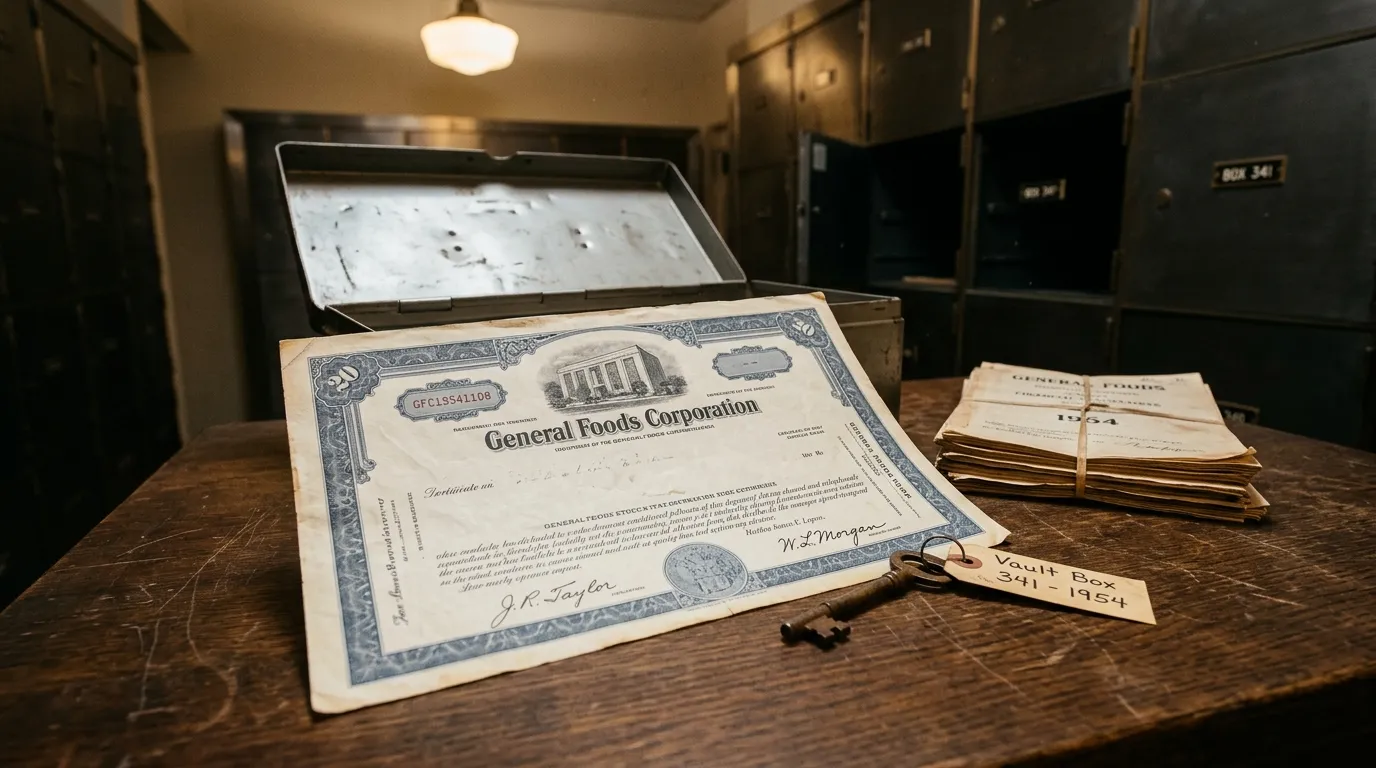
Finding an old stock certificate inside a family bank vault raises immediate questions. People often wonder about hidden wealth, forgotten dividends, or expired paper shares. Physical shares issued decades ago do not lose value automatically. A 1971 certificate for General Foods Corp might still hold real money.
However, paper shares require a clear verification process. You must trace corporate acquisition history first. Then, you need to check ownership registration and state unclaimed property databases.
Understanding Street Name Registration and Cede & Co
Old physical certificates record ownership in specific ways. You must read these details carefully to judge their financial worth.
- Street Name vs. Direct Registration: A certificate might feature a brokerage firm like Farnum & Co instead of a family name. This setup means the broker held the shares in street name for a client.
- The Role of Cede & Co: Stamps on the back often show Cede & Co. This name means the Depository Trust Company processed the shares centrally.
- Transfer Agent Signatures: Banks like Manufacturers Hanover Trust, Chase Bank, and Bankers Trust acted as transfer agents. They logged share movements, paid dividends, and canceled paper documents during corporate buyouts.
A Cede & Co stamp usually means bad news for the paper itself. The transfer agent likely converted the certificate into electronic book-entry shares decades ago. The paper stays intact, but its financial value disappears.
Tracing Corporate Mergers: The General Foods Timeline
Underlying equity can survive even when paper certificates die. Companies transform through decades of corporate buyouts.
Philip Morris Companies bought General Foods Corp in 1985 for $120 per share in cash. Later, Philip Morris merged General Foods with Kraft Foods. The business eventually split into Kraft Heinz and Altria Group.
Unclaimed cash payouts from the 1985 buyout moved into state government accounts. If you want to protect your broader personal wealth, read our guide on leaving a job for better pay. You can also review risks tied to an employer sending bill after termination to keep your estate safe.
How to Verify Value and Unclaimed Funds
Never throw away a paper certificate without doing research. Follow three basic steps to check for trapped funds.
Search State Unclaimed Property Registries
Corporations turn over cash to state treasuries when they lose track of shareholders. Search national tools like https://www.missingmoney.com/ using your family member’s name and past addresses.
Contact the Current Transfer Agent
Reach out to the transfer agent for Kraft Heinz or Altria, such as https://www.computershare.com/. Share the CUSIP number on the certificate. They will tell you if the certificate number remains active or canceled.
Evaluate Collectible Scripophily Value
Canceled stock certificates still carry value for historical collectors. People buy vintage paper shares for their artistic engravings, famous corporate names, and old signatures.
Disclaimer: The information provided on this website is for educational purposes only and should not be construed as official legal or financial advice.