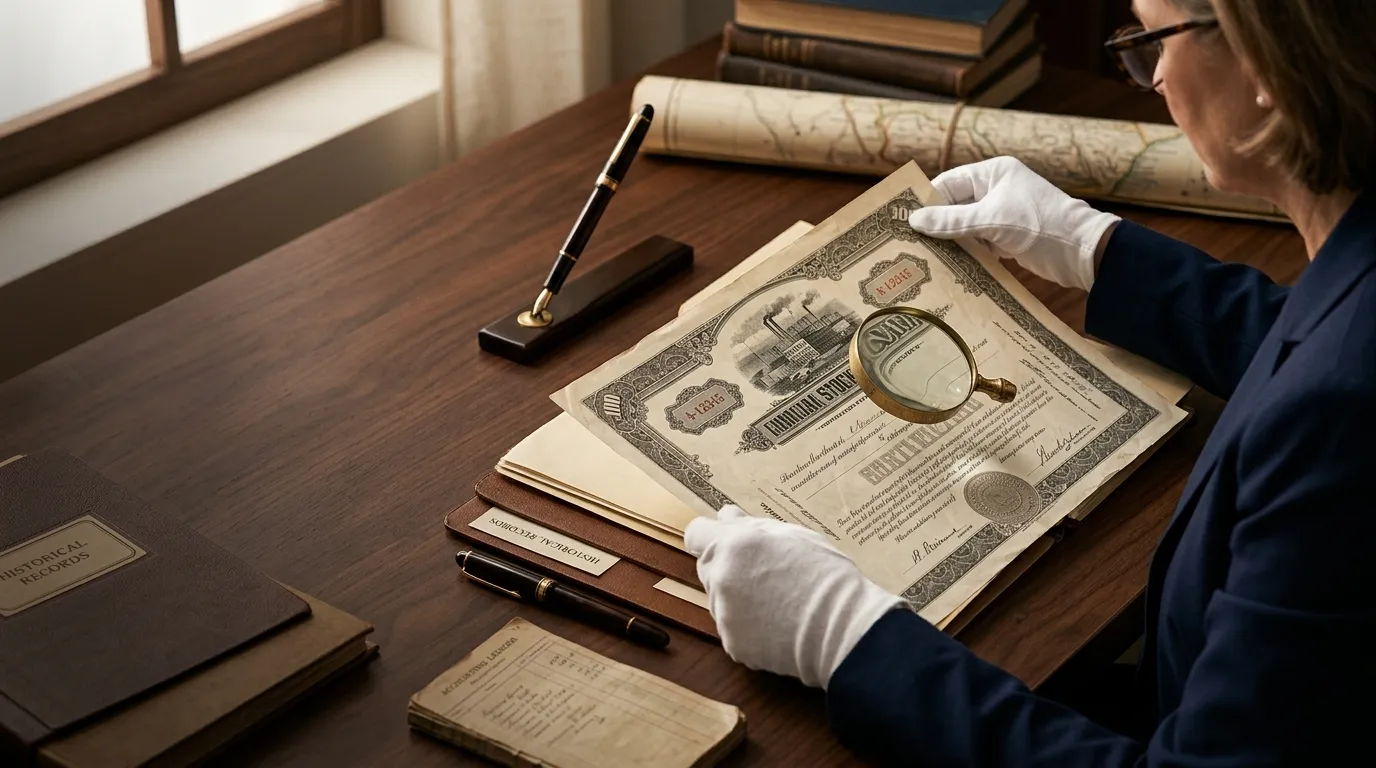
Finding an old physical stock certificate in an attic or estate collection is like discovering a financial time capsule. With major tech companies undergoing multiple stock splits over the decades, a single physical share issued in the early 1990s could potentially be worth tens of thousands of dollars today.
Real-World Case Study: An executor clearing out a late parent’s estate found a framed 1-share Microsoft (MSFT) physical certificate from 1991. Through historical stock splits, that single paper certificate had multiplied into 288 active shares, worth over $100,000+ in modern asset value.
How Stock Splits Multiply Legacy Paper Shares
When a company executes a stock split, physical certificate holders do not lose their proportional ownership. Additional shares are automatically created and assigned to the registered shareholder record.
| Original Issue Date | Initial Shares | Historical Stock Splits | Total Modern Shares |
| Microsoft (1991) | 1 Share | 9 Splits (2-for-1, 3-for-2, etc.) | 288 Shares |
| Apple (1990) | 1 Share | 5 Splits (including 7-for-1 & 4-for-1) | 224 Shares |
| Amazon (1997) | 1 Share | 4 Splits (including 20-for-1) | 240 Shares |
4 Steps to Verify if a Legacy Stock Certificate is Still “Live”
1. Contact the Official Transfer Agent
Paper certificates list an original Transfer Agent, but legacy banks merge over time. Modern corporate issuers utilize major transfer agents like Computershare or American Stock Transfer & Trust (AST). Contacting the current transfer agent with the certificate number and registered name will immediately confirm whether the certificate is active, converted to digital book-entry, or canceled.
2. Search State Unclaimed Property Databases
If a shareholder moves or stops communicating with the broker, companies are legally required to turn over inactive assets to state governments under Escheatment Laws.
- Search the official National Association of Unclaimed Property Administrators (NAUPA) portal at MissingMoney.com.
- Check the Treasury or Unclaimed Property department sites for the specific states where the original owner resided.
3. Inspect the Physical Certificate for Cancelation Marks
Examine the physical document closely. If the certificate was previously cashed out or converted to digital form, it will usually feature physical punch holes, a red “CANCELED” stamp, or hole perforations through the signature line.
4. Verify Estate Executor Authority
If the original shareholder has passed away, transfer agents and state unclaimed property divisions require legal estate authorization. You will typically need to provide:
- An official certified Copy of the Death Certificate.
- Court Letters Testamentary or Letters of Administration proving executor status.
- Completed Transfer Request forms signed by the legal representative.
Key Takeaway: Never throw away or destroy an un-canceled paper stock certificate before conducting a full audit with the issuer’s active transfer agent and state unclaimed property registries.
How to Claim Your Unclaimed Financial Assets
- Document Everything: Scan both sides of the physical stock certificate before mailing any original documentation.
- Call State Treasury Units Early: Government unclaimed property divisions operate on limited public hotline schedules—prepare all estate identification beforehand.
- Reinvest or Cash Out: Once verified, you can deposit the modernized shares directly into a personal brokerage account.
Expand your broader wealth management roadmap by exploring our master guide on High Yield Investment Strategies.
Disclaimer: The information provided on this website is for educational and informational purposes only and should not be construed as legal, estate planning, or financial advice.