Black Seed Benefits: Uses, Research, and Safety
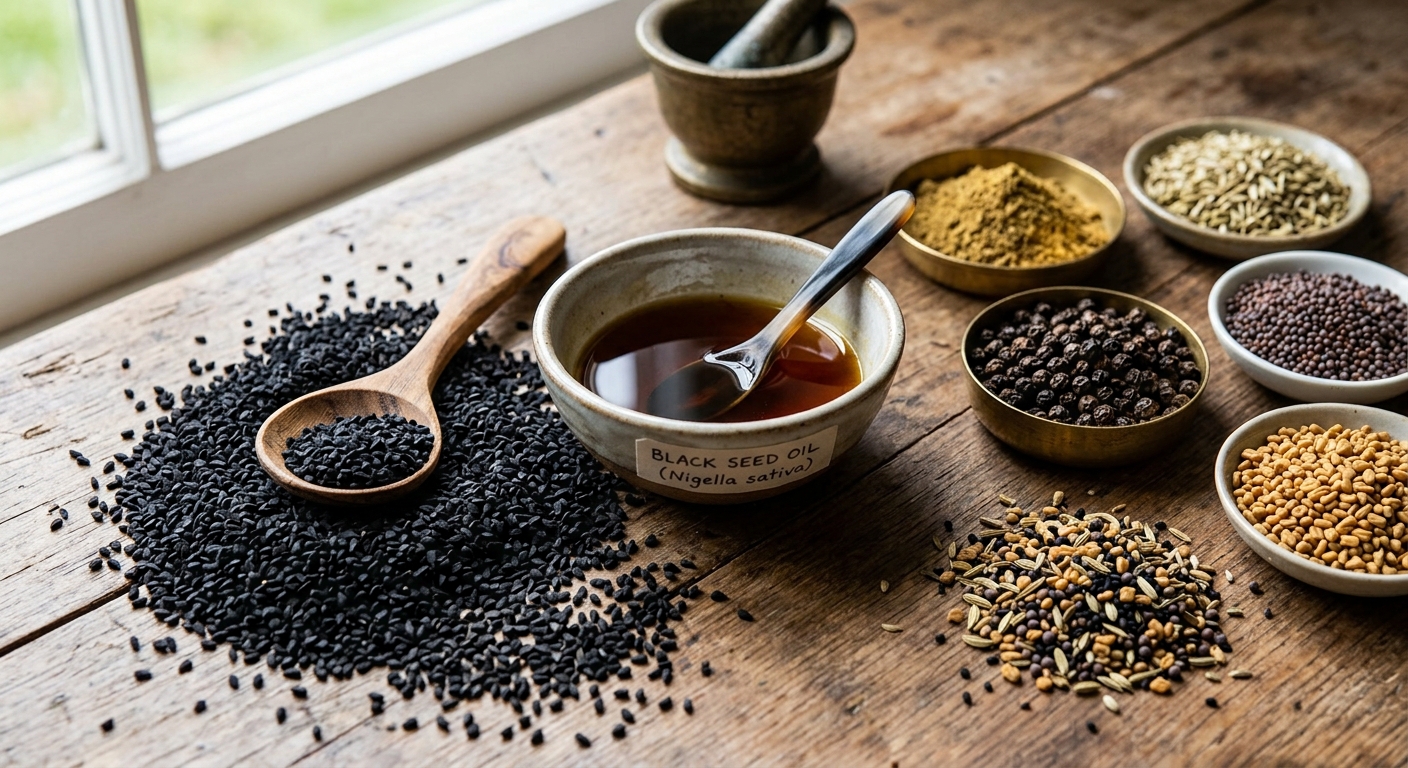
If you are researching black seed benefits, you are probably trying to work out whether Nigella sativa deserves a place in your diet—or whether black seed oil is simply another overpromoted supplement. Black seeds, also called black cumin or kalonji, have a long history in traditional food and herbal practices. Modern research has also examined their antioxidant, anti-inflammatory, metabolic, and cardiovascular effects.
The useful answer is more measured: black seeds contain biologically active compounds that may support some aspects of health, but the evidence is still developing. Results from laboratory studies and small human trials do not prove that black seed can cure, prevent, or replace treatment for any disease.
This guide explains the potential benefits of black seeds, what research actually suggests, how to use them, and the safety issues that matter—especially when using concentrated black seed oil or supplements.
Black Seed Benefits and What Research Says About Nigella sativa
What are black seeds?
Black seed comes from Nigella sativa, a flowering plant in the buttercup family. The small, angular black seeds are used as a spice in parts of the Middle East, North Africa, South Asia, and Eastern Europe. They have a sharp, slightly bitter flavor often compared with oregano, onion, pepper, or toasted cumin.
Other names include:
- Black cumin
- Black caraway
- Kalonji
- Habbat al-barakah
- Nigella sativa
Black seed is not the same plant as black cumin (Bunium persicum) or regular cumin (Cuminum cyminum). Product labels can be confusing, so check that the botanical name is Nigella sativa if you are buying a supplement or oil.
Traditionally, black seeds have been used in cooking and in herbal preparations for digestive complaints, respiratory symptoms, skin concerns, and general wellness. Traditional use can provide useful clues for research, but it is not the same as clinical proof.
Nutritional compounds found in black seeds
Whole black seeds contain a mixture of:
- Dietary fat, including unsaturated fatty acids
- Protein
- Dietary fiber
- Plant sterols
- Minerals in smaller amounts
- Volatile oils and other plant compounds
The most discussed active compound is thymoquinone, found mainly in the seed’s volatile oil. Researchers have also studied compounds such as thymohydroquinone, thymol, carvacrol, and various alkaloids and saponins.
The exact composition varies according to growing conditions, processing, storage, and whether the product is made from whole seeds, fixed oil, or essential oil. This variation is one reason research findings do not always translate neatly from one product to another.
A practical point: black seeds may contain interesting bioactive compounds, but normal culinary servings are not a replacement for nutrient-dense foods such as vegetables, beans, whole grains, nuts, fish, or fruit.
Antioxidant and anti-inflammatory potential
Oxidative stress occurs when reactive molecules outnumber the body’s ability to control them. Inflammation is a normal part of immune defense, but persistent or excessive inflammation is involved in many chronic conditions.
Laboratory and animal research suggests that thymoquinone and other black seed compounds may:
- Help neutralize some reactive molecules
- Influence antioxidant enzymes
- Affect inflammatory signaling pathways
- Reduce markers of inflammation in certain experimental settings
These findings help explain why black seed is often described as antioxidant and anti-inflammatory. However, laboratory activity does not automatically mean that eating black seeds produces a clinically meaningful effect in people.
Small human studies have reported changes in selected inflammatory or oxidative-stress markers, but the studies vary widely in dose, product, duration, and participant health. There is not enough consistent evidence to recommend black seed as a treatment for an inflammatory disease.
Possible effects on immune health
Black seed is sometimes marketed as an “immune booster.” That wording is too strong and can be misleading.
The immune system is not a simple switch that can be turned up without consequences. Research on Nigella sativa has explored effects on immune cells, cytokines, and inflammatory responses. Some laboratory and early clinical findings suggest that black seed compounds may influence immune activity, but this does not establish that they prevent infections or strengthen immunity in a general, predictable way.
For everyday immune support, the evidence is much stronger for basics such as:
- Adequate sleep
- Recommended vaccinations
- A varied diet
- Regular physical activity
- Not smoking
- Managing conditions such as diabetes or asthma
- Washing hands and staying home when sick
Black seed can be a flavorful food, but it should not be used instead of medical care or proven preventive measures.
Potential heart and metabolic benefits
One of the more promising areas of research involves blood pressure, blood glucose, and blood lipids. Some small clinical trials and reviews have reported modest improvements in one or more of these measures among people taking black seed preparations.
Possible areas of interest include:
- Slight reductions in blood pressure
- Changes in fasting blood glucose or longer-term glucose markers
- Modest effects on total cholesterol or triglycerides
- Effects on oxidative stress related to metabolic health
The evidence remains limited for several reasons:
- Studies often include relatively few participants.
- Trials use different forms of black seed and different doses.
- Some studies are short-term.
- Results are not consistently positive.
- Improvements in a laboratory measurement do not always translate into fewer heart attacks, strokes, or diabetes complications.
These findings do not justify stopping prescribed medication or treating black seed as a substitute for weight management, physical activity, blood pressure care, or a medically appropriate eating pattern.
If you have diabetes, high blood pressure, or high cholesterol, black seed may potentially add to the effects of medication. That is a reason to discuss it with a healthcare professional rather than assume it is harmless.
What research says about other possible uses
Researchers have also investigated black seed for areas such as asthma symptoms, digestive health, skin conditions, allergies, and joint discomfort. Some early studies are interesting, but many are too small or inconsistent to support firm recommendations.
It is useful to separate the evidence into three categories:
- Traditional use: Black seed has been used for generations in food and herbal practices.
- Preclinical research: Cell and animal studies suggest possible antioxidant, anti-inflammatory, antimicrobial, or metabolic effects.
- Human clinical research: Early trials suggest potential benefits in selected measurements, but the evidence is not strong enough to claim broad disease treatment or prevention.
That distinction matters. “May affect a biological pathway” is not the same as “will improve your health outcome.”
An authoritative overview from the National Center for Complementary and Integrative Health can help readers compare traditional claims with the quality of available clinical evidence. For condition-specific questions, clinical guidance from organizations such as the American Diabetes Association or the American Heart Association is more relevant than supplement marketing.
How to Use Black Seeds Safely: Forms, Dietary Ideas, Precautions, and FAQs
Whole black seeds versus black seed oil
The form you choose changes both the experience and the risk.
Whole or ground black seeds
Whole seeds are generally used as a culinary spice. You can toast them lightly, grind them, or add them directly to food. They provide flavor, some fiber, fat, and plant compounds, but the amount consumed in normal cooking is usually modest.
Good options include:
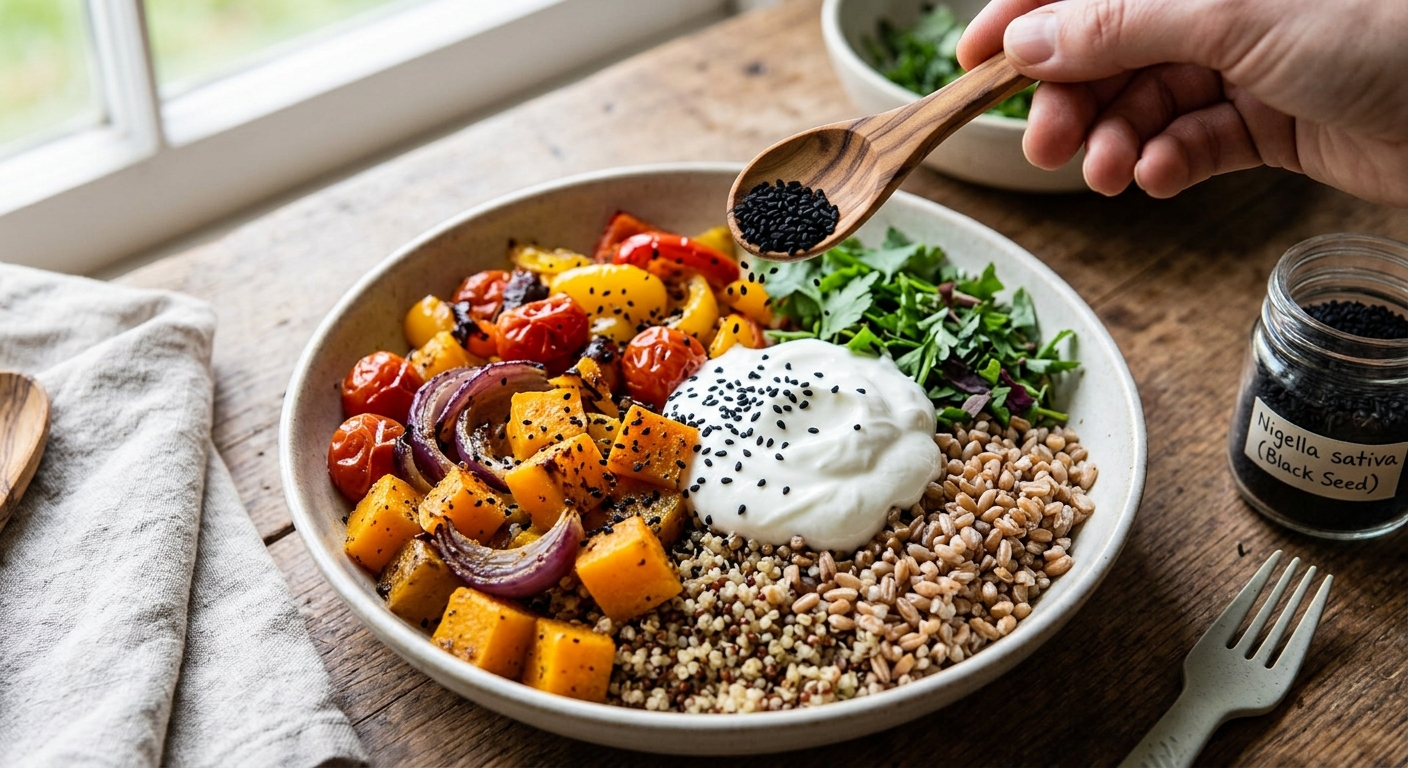
- Sprinkling them over eggs, roasted vegetables, or potatoes
- Mixing them into yogurt, hummus, or bean dishes
- Adding them to bread, flatbreads, or savory muffins
- Stirring a small amount into soups, stews, or rice
- Combining them with lemon, garlic, herbs, and olive oil as a seasoning blend
Black seed oil
Black seed oil is made by pressing or extracting the seeds. It is more concentrated than a culinary serving of whole seeds and may contain a higher amount of thymoquinone or other active compounds, depending on the preparation.
Black seed oil products differ considerably. Some are intended for food use, while others are sold as dietary supplements or topical products. Essential oil is especially concentrated and should not be treated like ordinary cooking oil. Do not swallow an essential oil unless a qualified professional has specifically advised you to do so.
There is no universally established dose of black seed oil for general health. Follow the product label, avoid assuming that a larger amount is better, and be cautious with products that do not clearly state the ingredients, serving size, or botanical name.
Practical ways to include black seeds in a balanced diet
For most healthy adults, using whole black seeds as a seasoning is the simplest and lowest-risk approach.
Try this:
- Start with a small culinary amount, such as a pinch or roughly a quarter teaspoon.
- Add it to a meal you already eat rather than taking it as a “shot.”
- Notice whether the flavor causes stomach discomfort, heartburn, or an allergic reaction.
- Keep the rest of your diet balanced instead of treating black seed as the central health strategy.
Possible side effects
Black seeds and black seed oil are not automatically safe for everyone. Possible side effects can include:
- Nausea or stomach discomfort
- Bloating or diarrhea
- An unpleasant taste or heartburn
- Headache or dizziness
- Skin irritation when applied topically
- Allergic reactions
Topical black seed oil has been associated with contact dermatitis in some people. If applying it to the skin, test a small area first and stop if you develop redness, itching, swelling, blistering, or pain. Do not apply it to broken skin or near the eyes.
A serious allergic reaction requires urgent medical attention. Warning signs include difficulty breathing, swelling of the lips or tongue, widespread hives, or feeling faint.
Who should use extra caution?
Speak with a doctor or pharmacist before using black seed supplements or oil if you:
- Take medication for diabetes or low blood sugar
- Take blood-pressure medication
- Use warfarin, aspirin, clopidogrel, or another medicine that affects clotting
- Have a bleeding disorder
- Are scheduled for surgery
- Are pregnant or trying to become pregnant
- Are breastfeeding
- Have liver or kidney disease
- Have a known allergy to plants or spices
- Are giving it to a child
Black seed may theoretically or practically add to the effects of medicines that lower blood sugar, reduce blood pressure, or affect blood clotting. The safety of concentrated supplements during pregnancy and breastfeeding is not well established. As a precaution, avoid medicinal amounts unless a qualified clinician recommends them.
Tell your healthcare professional about black seed before surgery, particularly if you use oil or capsules regularly. Supplements can also complicate the interpretation of symptoms or laboratory results.
Common mistakes to avoid
Mistaking traditional use for proof
A long history of use is relevant, but it does not prove that a product treats a modern medical condition. Use traditional claims as a reason to investigate—not as a guarantee.
Assuming “natural” means risk-free
Plant compounds can have pharmacological effects. They can also cause allergies and interact with medication.
Comparing unlike products
A teaspoon of whole seeds, a cold-pressed culinary oil, a standardized capsule, and an essential oil are not interchangeable. Research findings from one preparation may not apply to another.
Taking too much too soon
More is not necessarily more effective. High doses may increase side effects without providing extra benefit.
Replacing treatment
Do not stop medication for blood pressure, diabetes, asthma, cholesterol, or any other condition because of claims about black seed benefits. If you want to try it, discuss how to do so safely and monitor relevant symptoms or measurements.
Frequently Asked Questions
What are the main black seed benefits?
Research suggests possible antioxidant, anti-inflammatory, blood-pressure, blood-glucose, and blood-lipid effects. However, the strongest claims are not established, and benefits may depend on the product, dose, and individual health status.
Is black seed oil better than whole black seeds?
Not necessarily. Oil is more concentrated, but that does not automatically make it more useful or safer. Whole seeds are easier to use as food, while oil and capsules may carry greater interaction and side-effect concerns.
Can black seed lower blood sugar?
Some small studies have reported improvements in glucose measurements, but black seed is not a proven diabetes treatment. It may interact with diabetes medication, so people with diabetes should seek professional advice before using concentrated products.
Can men take black seed oil?
Adult men can generally consume black seed as a culinary spice, but concentrated oil or supplements still require the same safety considerations. There is not enough reliable evidence to claim that black seed broadly improves testosterone, fertility, sexual performance, or muscle growth.
How much black seed should I take?
There is no universally accepted dose for general wellness. For food use, begin with a small amount as a seasoning. For oil or capsules, follow the label and ask a pharmacist or doctor if you take medication or have a health condition.
Does black seed cure infections or cancer?
No. Black seed should not be described as a cure for infections, cancer, or any other disease. Laboratory findings are not proof of a treatment effect in humans.
Can I use black seed on my skin?
Some people use black seed oil topically, but it can irritate the skin or cause allergic dermatitis. Patch-test cautiously, avoid sensitive areas, and stop if a reaction develops.
The most credible black seed health benefits are potential, modest effects linked to antioxidant activity, inflammation, blood pressure, glucose, and blood lipids—not guaranteed disease prevention or treatment. Whole black seeds used in normal cooking are the most practical way to try them. Black seed oil and capsules are more concentrated, less standardized, and more likely to raise questions about interactions and side effects.
Your next step is simple: if you are healthy, try a small culinary amount in food and treat it as one ingredient in a balanced diet. If you take medication, have a chronic condition, are pregnant or breastfeeding, or want to use concentrated black seed oil, check with a healthcare professional first.