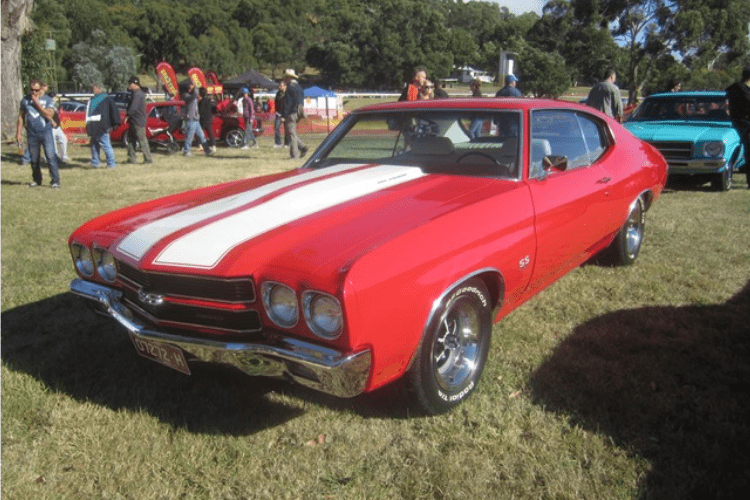
Introduction to Muscle Cars of the 1970s
The 1970s were considered the golden age of muscle cars in America. During this era, car manufacturers produced powerful and stylish vehicles with large V8 engines designed for speed and performance. Famous models such as the Ford Mustang, Chevrolet Camaro, and Dodge Charger became symbols of freedom, power, and youth culture. Muscle cars were popular for their aggressive design, loud engines, and strong performance on the road, making them an important part of automotive history.
Top 10 Muscle Cars Overview
1. 1969 Dodge Charger
Universally recognized for its Coke-bottle styling and hidden headlights, the ’69 Charger is one of the most iconic muscle cars ever built. The R/T trim came with a powerful 440 Magnum V8 or the legendary 426 Hemi, making it a true performance legend of its era.
2. 1969 Chevrolet Camaro ZL1 / SS
Chevrolet’s answer to the Mustang, the 1969 Camaro became a muscle car icon. The ultra-rare ZL1 version featured an all-aluminum 427 big-block engine originally built for racing, making it one of the most valuable and powerful American classics.
3. 1970 Plymouth Hemi ’Cuda
Built on Chrysler’s E-body platform, the ’Cuda was designed to house the massive 426 “Elephant” Hemi engine. Its aggressive design, wide stance, and raw power make it one of the most sought-after Mopar muscle cars ever produced.
4. 1970 Chevrolet Chevelle SS 454
The Chevelle SS 454 represents peak GM muscle car performance. Equipped with the LS6 454 big-block V8, it delivered extreme horsepower and became famous for its brutal straight-line speed and street dominance.
5. 1967 Shelby GT500
One of the most legendary Mustangs ever built, the Shelby GT500 was upgraded by Carroll Shelby for maximum performance. Its big-block V8 and aggressive tuning made it a serious street and strip machine with iconic status.
6. 1969 Dodge Charger Daytona
Built for NASCAR domination, the Charger Daytona featured an aerodynamic nose cone and massive rear wing. It was engineered for high-speed stability and became one of the most recognizable aero muscle cars in history.
7. 1964 Pontiac GTO
Often credited as the first true muscle car, the 1964 GTO combined a mid-size body with a powerful V8 engine. It started the muscle car revolution and set the standard for performance cars in the 1960s.
8. 1969 Ford Mustang Boss 429
Created to homologate Ford’s big NASCAR engine, the Boss 429 Mustang is extremely rare and highly powerful. Its massive engine and limited production make it one of the most collectible Mustangs ever built.
9. 1987 Buick GNX
Known as the “Darth Vader” of muscle cars, the GNX shocked the automotive world with turbocharged V6 power that outperformed many V8s of its time. It represents the modern evolution of muscle performance.
10. 2023 Dodge Challenger SRT Demon 170
The most extreme modern muscle car ever produced, the Demon 170 delivers over 1,000 horsepower on E85 fuel. It is built for drag racing dominance and stands as the peak of modern American performance engineering.
Performance and Specs of 1970s Muscle Cars
1970s muscle cars peaked in raw factory performance around 1970 before strict emissions regulations and the 1973 oil crisis drastically reduced horsepower. These cars achieved sub-6-second times and sub-14-second quarter-mile runs using massive V8 engines and often understated horsepower ratings.
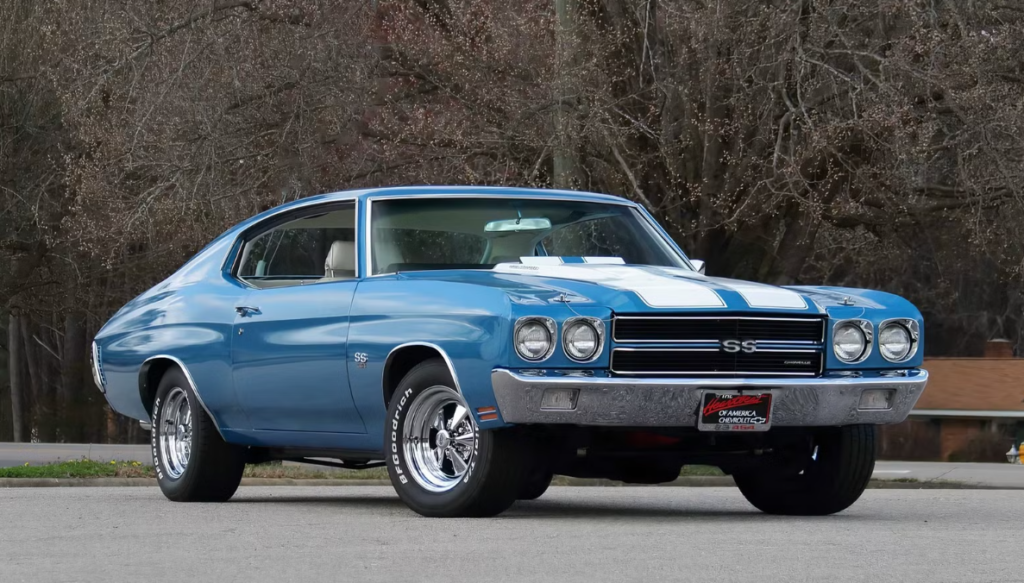
The 1970s marked a defining era for American muscle cars, where raw power, aggressive styling, and large-displacement engines dominated the automotive landscape. These vehicles were built with one primary focus: performance. Manufacturers such as Chevrolet, Ford, Dodge, and Plymouth competed fiercely to produce the fastest and most powerful street machines of their time.
At the heart of most 1970s muscle cars were big-block V8 engines. Engines like the Chevrolet 454 cubic-inch LS6, the Chrysler 426 Hemi, and the Ford 429 Cobra Jet were legendary for producing extreme horsepower and torque. Many of these cars could accelerate from 0 to 60 mph in under six seconds, an impressive feat for the era, and they were capable of quarter-mile times in the low 13-second range or better.
Models such as the 1970 Chevrolet Chevelle SS 454, 1970 Plymouth Hemi ’Cuda, and 1969 Dodge Charger Daytona stood out not only for their speed but also for their engineering. Aerodynamics began to play a bigger role, especially in NASCAR-inspired designs like the Charger Daytona, which featured a long nose cone and rear wing for high-speed stability.
However, by the mid-1970s, performance began to decline due to stricter emissions regulations, rising insurance costs, and the oil crisis. Compression ratios were lowered, and horsepower ratings dropped significantly compared to the peak years of the late 1960s and early 1970s.
Despite this decline, 1970s muscle cars remain iconic. Their combination of bold design, mechanical simplicity, and raw power continues to influence modern performance vehicles and maintain a strong presence in automotive culture today.
15 Brutally Fast Muscle Cars Made In The 1970s
Legacy and Impact on Modern Muscle Cars
The muscle cars of the 1970s left a lasting legacy that continues to shape modern automotive design and performance. Although the original muscle car era faced setbacks due to fuel crises, emissions regulations, and rising insurance costs, the core philosophy of raw power and aggressive styling never disappeared.
Modern muscle cars such as the Dodge Challenger, Ford Mustang, and Chevrolet Camaro draw heavily from their 1970s predecessors. Designers continue to use bold, retro-inspired styling cues, while engineers combine them with advanced technology like fuel injection, turbocharging, and electronic stability systems. This blend allows today’s muscle cars to achieve performance levels far beyond what was possible in the 1970s while maintaining the spirit of the originals.
Another important impact is the revival of big horsepower culture. Cars like the Dodge Challenger SRT Demon 170 and high-performance Mustang and Camaro variants push well beyond 700–1000 horsepower, echoing the dominance of classic V8 legends such as the Hemi ’Cuda and Chevelle SS. Quarter-mile racing culture, track performance, and straight-line acceleration remain central to the identity of modern muscle cars.
The 1970s also influenced the collector and enthusiast market. Classic muscle cars are now highly valuable and celebrated as cultural icons, while modern manufacturers often release limited “heritage editions” to honor historic models. This connection between past and present keeps muscle car culture alive and continuously evolving.
In summary, the 1970s muscle cars established a performance legacy that modern vehicles continue to build upon, combining classic attitude with modern engineering to keep the muscle car spirit stronger than ever.